Key Lime Interactive: Redesigning the CityBus

Duration

4 months

Team

9 person team (Purdue UXD Experience Studio × KLI)

9 person team

(Purdue UXD Experience Studio × KLI)

Project Type

UX Design

My Role

I collaborated with my team on observations, contextual inquiry, guerrilla testing, survey design, usability testing, prototyping, and concept walkthroughs.

Context

CityBus is the primary public transit system for Purdue University students, serving Lafayette and West Lafayette. Despite being free for students, riders expressed widespread dissatisfaction, the app was confusing, bus times were inaccurate, and the experience left people glued to their phones just to make a trip work.

Deliverables

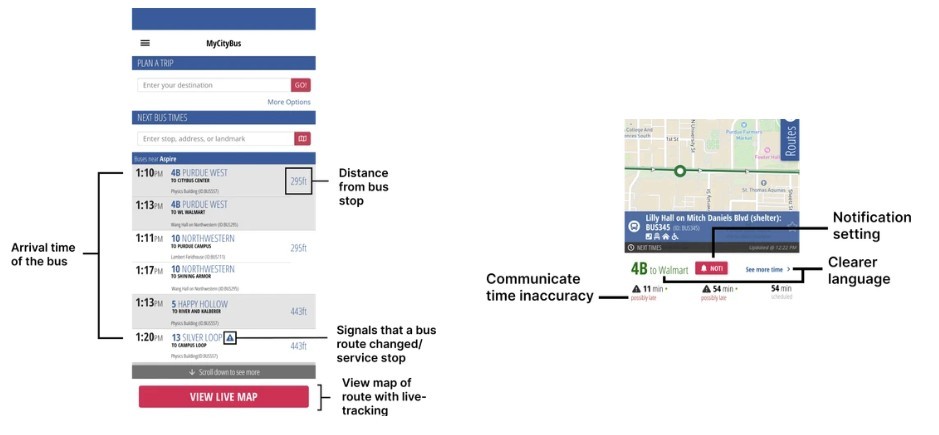
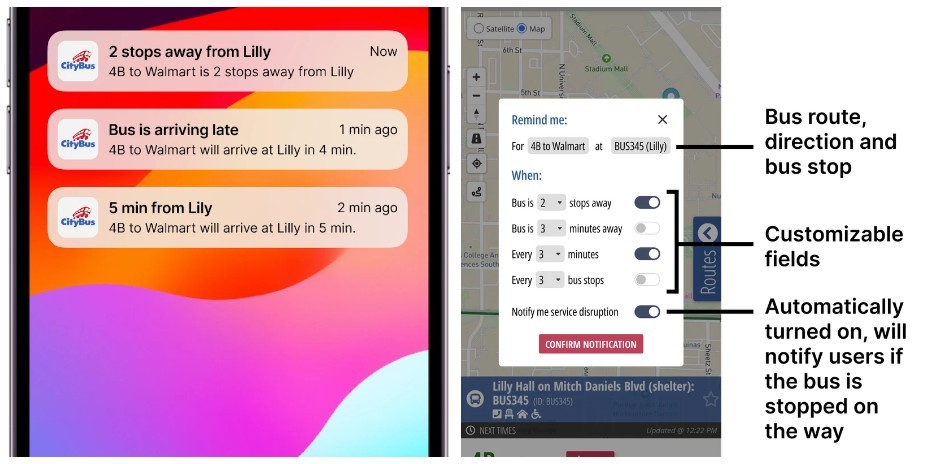
Two parallel design solutions: a complete app overhaul exploring new user flows, map-centric navigation, and a lock screen widget, and a current app redesign with practical, implementable improvements like push notifications, bus alerts, and clearer navigation.

Impact

The CEO confirmed that app changes were the most feasible path for CityBus to act on, and our practical redesign was scoped to work within the current software system.

Imagine needing to get to class, but you can't figure out which bus to take or when it's coming,
and the app that's supposed to help makes it more confusing.

Imagine needing to get to class, but you can't figure out which bus to take or when it's coming, and the app that's supposed to help makes it more confusing.

Imagine needing to get to class, but you can't figure out which bus to take or when it's coming, and the app that's supposed to help makes it more confusing.

Understanding the experience

I started by riding the buses myself. My team split into three groups to ride different routes. Through these observations, we mapped out a 7-step journey: plan route, locate stop, wait, board, ride, exit, and walk to destination. Pain points included bus stop locations being unclear, the app showing inaccurate times, tinted windows making it hard to see your stop, and the PA system being too quiet to hear.
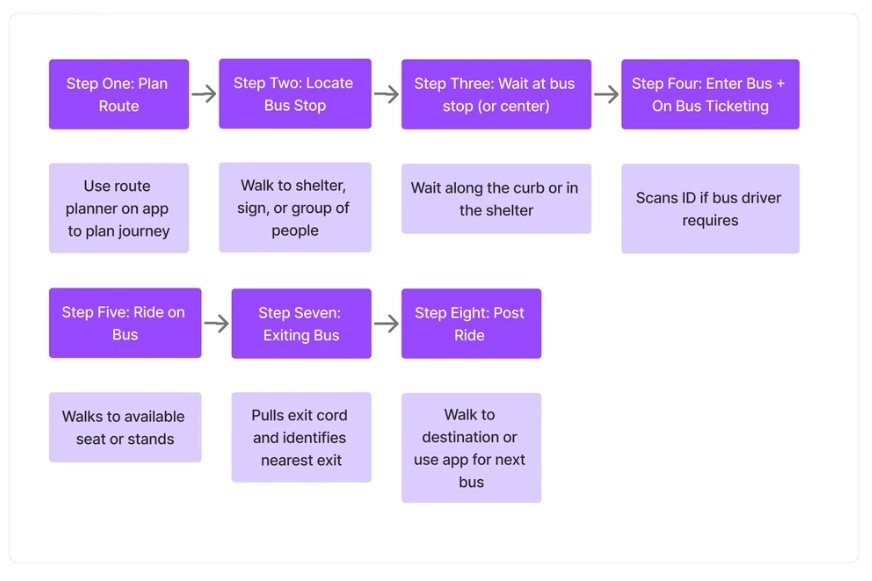
Key steps in bus riding process
What people were saying online

I then dug into secondary research to understand what the broader rider community was saying. The same frustrations kept showing up: the app glitches, bus times are wrong, the interface is confusing, and bus service stops too early for students who study or work late.


Users on the Purdue subreddit complained about bugginess and inaccurate times. Facebook users flagged missing bus stop signs. App store reviews mentioned a confusing UI and inaccurate routes. However, people appreciated the live tracking feature, when it worked.

What people were saying online

I then dug into secondary research to understand what the broader rider community was saying. The same frustrations kept showing up: the app glitches, bus times are wrong, the interface is confusing, and bus service stops too early for students who study or work late.


Users on the Purdue subreddit complained about bugginess and inaccurate times. Facebook users flagged missing bus stop signs. App store reviews mentioned a confusing UI and inaccurate routes. However, people appreciated the live tracking feature, when it worked.

Riding with users

To go deeper than observation, we conducted contextual inquiries with 9 Purdue students, accompanying them on actual bus rides while they thought aloud through the experience. We deliberately included both experienced daily riders and people who'd only taken the bus once or twice to avoid bias.

Riding with users

To go deeper than observation, we conducted contextual inquiries with 9 Purdue students, accompanying them on actual bus rides while they thought aloud through the experience. We deliberately included both experienced daily riders and people who'd only taken the bus once or twice to avoid bias.

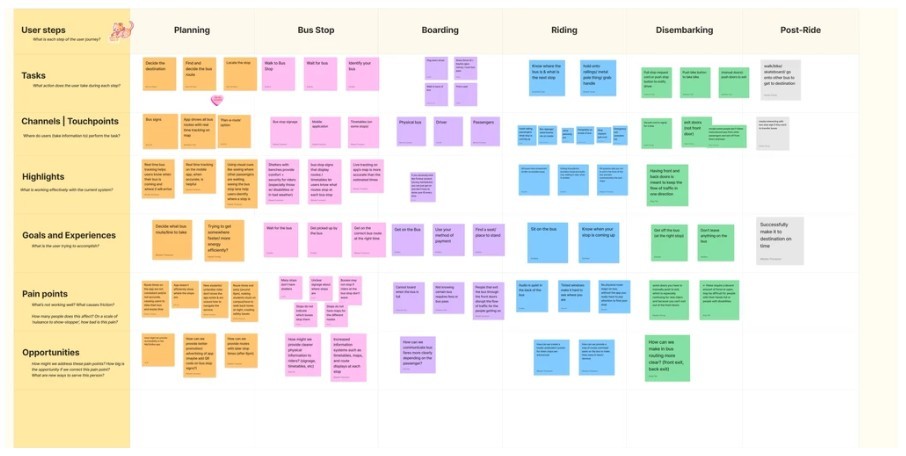
Journey map to capture the full CityBus experience, analyzing user pain points, navigation challenges, and areas for improvement. It served as a key reference for identifying design opportunities and shaping our solutions.
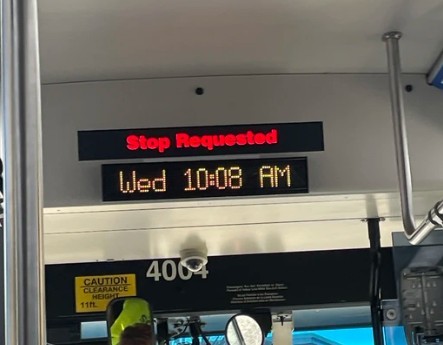
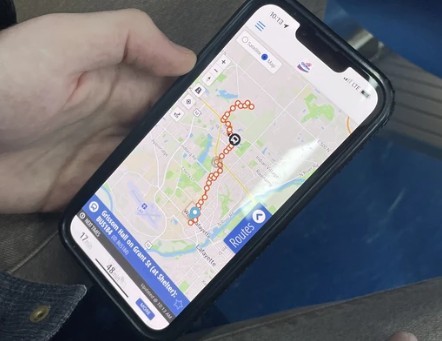
Images of communication and accessibility issues with a lack of information on signage and an over-reliance on the app with little physical indicators.

Six key issues surfaced:


  • Lack of signage — most stops only list route numbers; some have no sign at all

  • Cramped shelters — high-traffic stops can barely fit 4-5 people

  • Over-reliance on the app — no physical indicators of when buses arrive, so riders are glued to their phones

  • LCD display issues — the screen showing upcoming stops was hard to read from the back

  • Confusing stop cord — new riders didn't realize they needed to pull it to request a stop

  • Inconsistent PA system — too quiet on some buses, absent on others

"I had no idea I was supposed to pull the cord. I just waited and hoped the driver would stop."

"I had no idea I was supposed to pull the cord.
I just waited and hoped the driver would stop."

"I had no idea I was supposed to pull the cord. I just waited and hoped the driver would stop."

First-time rider

First-time rider

Narrowing down what to design for

I now had an overwhelming number of pain points across both the digital and physical experience. To prioritize, I used three methods:
Guerrilla Testing

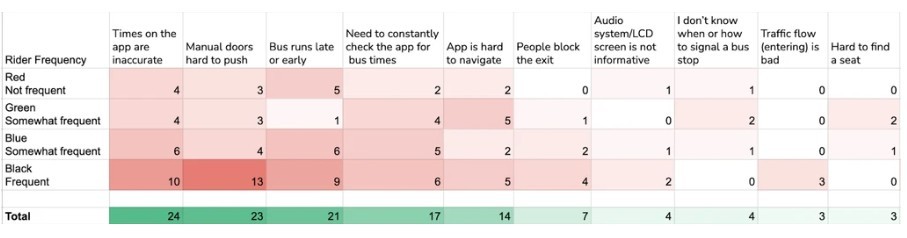
My team and I set up outside high-traffic areas on campus and asked passing students to mark their top three frustrations on a board. Participants used color-coded markers based on how frequently they ride, so we could see whether pain points differed by experience level. They had the same issues that showed up across the board.

Guerrilla Testing

My team and I set up outside high-traffic areas on campus and asked passing students to mark their top three frustrations on a board. Participants used color-coded markers based on how frequently they ride, so we could see whether pain points differed by experience level. They had the same issues that showed up across the board.

Top 10 Pain Points Identified Through Guerrilla Testing
User Survey

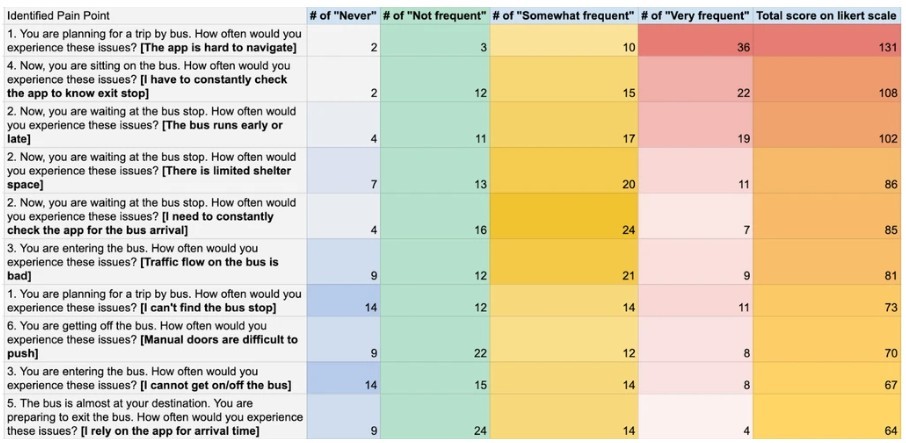
We distributed a survey asking students to rate the frequency of pain points at each stage of the journey. The results were similar to our guerrilla findings.

User Survey

We distributed a survey asking students to rate the frequency of pain points at each stage of the journey. The results were similar to our guerrilla findings.

Top 10 Pain Points Identified Through User Survey

CEO Interview

We interviewed the CityBus CEO to understand feasibility constraints. Key takeaways: CityBus doesn't actually manage the app, physical infrastructure changes are expensive, and changes to the app would be the easiest for CityBus to act on.


This confirmed our decision to focus on the MyCityBus app as our design space.

CEO Interview

We interviewed the CityBus CEO to understand feasibility constraints. Key takeaways: CityBus doesn't actually manage the app, physical infrastructure changes are expensive, and changes to the app would be the easiest for CityBus to act on.


This confirmed our decision to focus on the MyCityBus app as our design space.

Four design opportunities

  1. Over-reliance on the app — riders have to constantly check their phones with no physical alternatives for tracking bus arrival

  2. Poor time communication — bus times aren't clearly or accurately displayed in the app

  3. Bad in-app navigation — confusing screen flows, no backtracking, and unclear information hierarchy

  4. Bus time inaccuracies — displayed times were not accurate, causing missed buses and frustration

Four design opportunities

  1. Over-reliance on the app — riders have to constantly check their phones with no physical alternatives for tracking bus arrival

  2. Poor time communication — bus times aren't clearly or accurately displayed in the app

  3. Bad in-app navigation — confusing screen flows, no backtracking, and unclear information hierarchy

  4. Bus time inaccuracies — displayed times were not accurate, causing missed buses and frustration

Designing for identified opportunities

Designing for identified
opportunities

After shifting our focus to the app for our redesign, we split into two teams — one to work on realistic, implementable improvements and the other to explore a more innovative, experimental redesign.
Complete Overhaul

Simple and Intuitive Navigation

I redesigned the app around a map-centric interface that highlights nearby routes and stops. Using GPS tracking, the app continuously updates to provide real-time bus and user locations for a more accurate and intuitive experience.

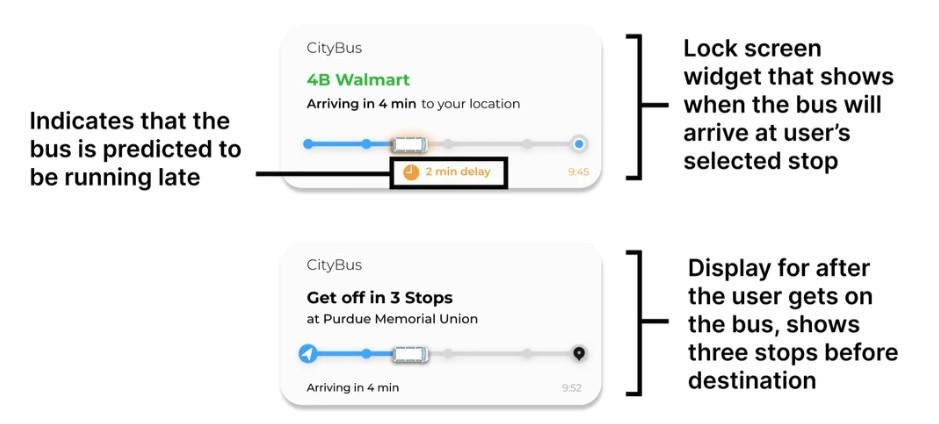
Reducing User Reliance on the MyCityBus App

Improving Communication of Bus Times

Improving Communication of Bus Times

Complete Overhaul

Simple and Intuitive Navigation

I redesigned the app around a map-centric interface that highlights nearby routes and stops. Using GPS tracking, the app continuously updates to provide real-time bus and user locations for a more accurate and intuitive experience.

Reducing User Reliance on the MyCityBus App

Improving Communication of Bus Times

Improving Communication of Bus Times

Current App Revisions

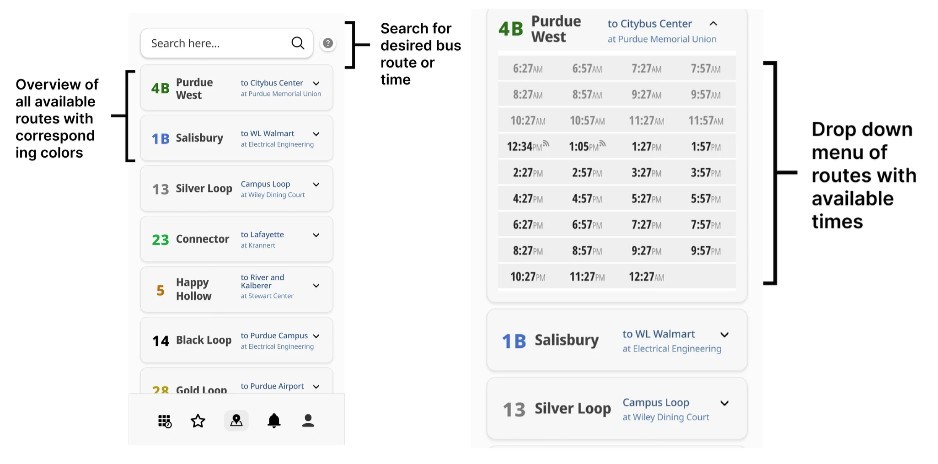
Optimized Communication of Bus Times

Notification System

Current App Revisions

Optimized Communication of Bus Times

Notification System

Reflection

This project taught me how messy and nonlinear the research and design process can be. We had to do round after round of research just to figure out what to design for, and that narrowing process ended up being where I grew the most. The other big takeaway was learning that two ideas can both be right. My team went back and forth on whether to overhaul the app or make smaller fixes, and eventually we just did both. That turned out to be the best call because it let us think big and stay practical at the same time.

Latest Projects

CONTACT

Reach out to start a conversation.

CONTACT

Reach out to start a conversation.

CONTACT

Reach out to start a conversation.